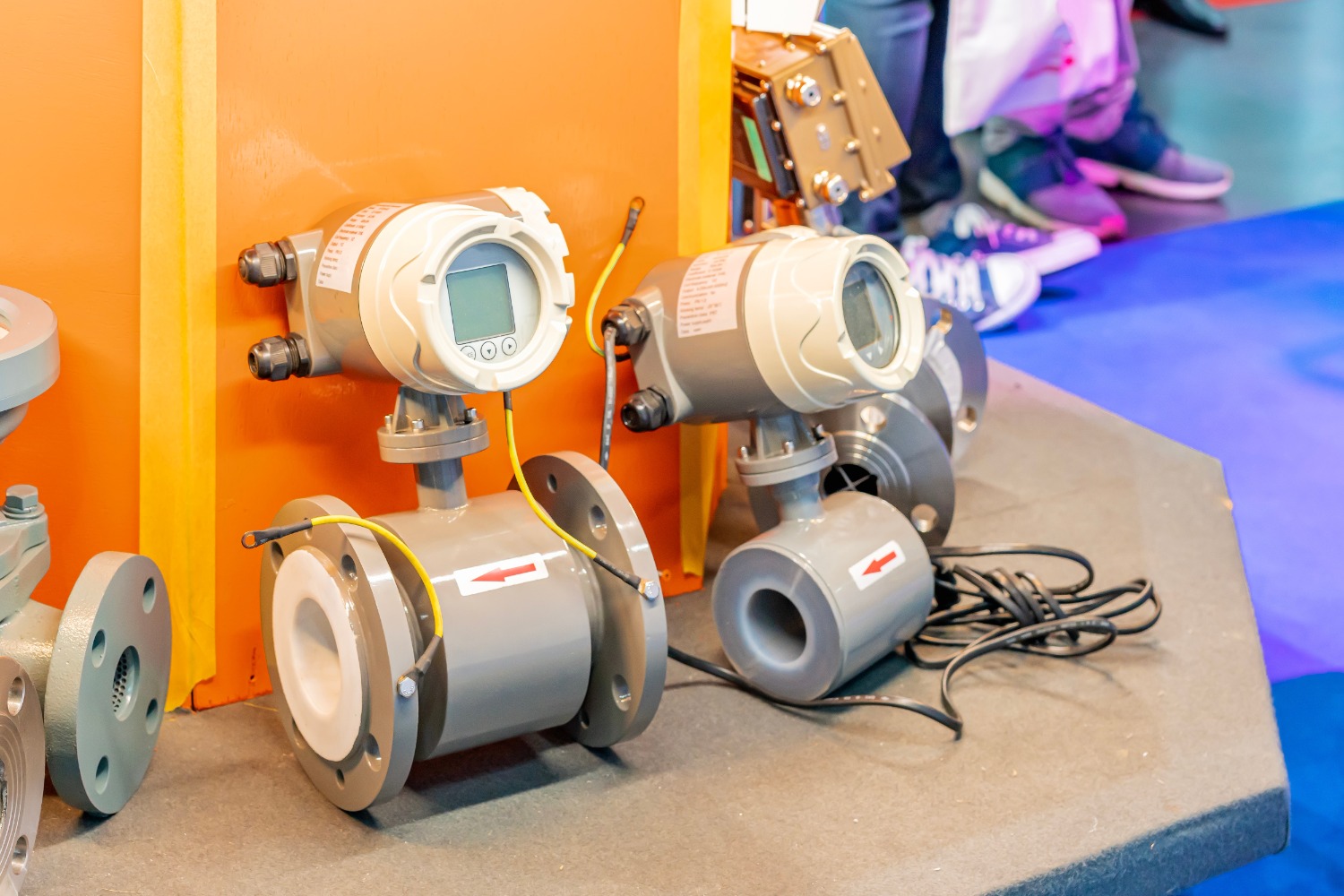
New-Technology Flowmeters
Since 2003, Flow Research has distinguished between new-technology flowmeters and traditional/conventional flowmeters, and the industry has largely adopted our definitions. Fundamentally, new-technology flowmeters — Coriolis, magnetic, ultrasonic, vortex, and thermal — were first introduced after 1950. Conventional flowmeters — differential pressure, positive displacement, turbine, variable area, and open channel — were introduced before that time. Each new-technology flowmeter is based on a different physical principle and represents a unique approach to flow measurement. Most new-technology flowmeters came into industrial use in the 1960s and 1970s.
New-technology flowmeters share several characteristics:
- Introduced since 1950
- Incorporate technological advances that avoid some of the problems inherent in traditional technology flowmeters
- More the focus of new product development efforts by the major flowmeter suppliers than traditional technology meters
- Higher performance level, including accuracy, than that of traditional technology meters
Magnetic flowmeters were first introduced in Holland in 1952. Tokimec first introduced ultrasonic meters in Japan in 1963. Eastech brought out vortex flowmeters in 1969, while Coriolis meters came onto the market in 1977. Thermal flowmeters were developed in the mid-1970s.
Initially Flow Research classified thermal flowmeters as traditional technology, even though they were introduced in the mid-1970s, primarily because their performance at the time was not at the same level as Coriolis and ultrasonic flowmeters. However, thermal flowmeter suppliers actively engaged in research to improve the accuracy and reliability of their meters, and this effort resulted in vastly improved technology. Thermal flowmeters are now capable of high performance in gas flow measurement applications, which are inherently more complicated than liquid flow measurements because mass — the basis of gas flow measurement — fluctuates with changes in pressure and temperature. After months of discussions with thermal flowmeter suppliers and other industry experts, we reclassified thermal flowmeters as “new-technology” meters in October 2003.